 Site • RSS • Apple Podcasts
Description (podcaster-provided):
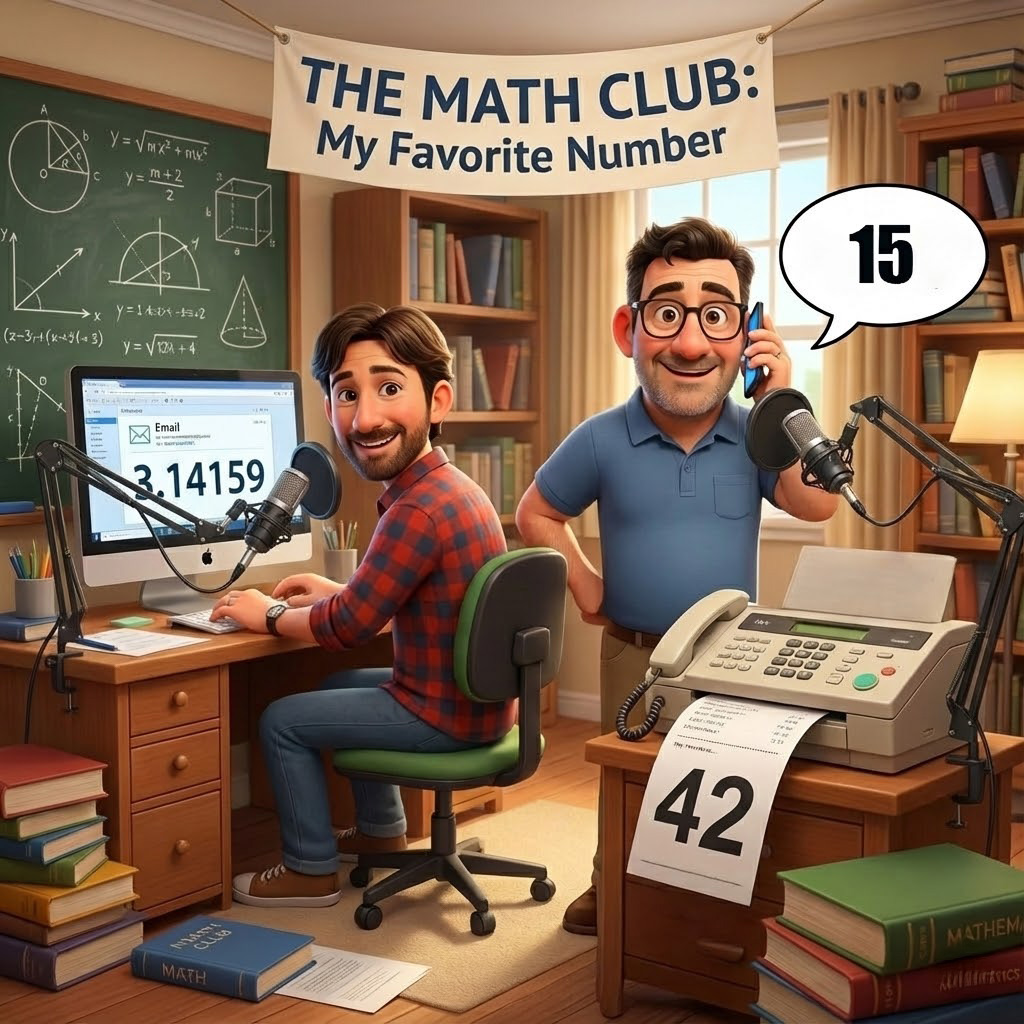
Join hosts Peter Littig and Noah King as they discuss and explain mathematical topics with their own unique style. Full of information that will interest and entertain math lovers as well as those who maybe don't love it quite that much… yet. Mathematical concepts, history, paradoxes, and puzzles await you, along with a generous helping of witty banter and fun. Calling all members…. The Math Club is open!Themes and summary (AI-generated based on podcaster-provided show and episode descriptions):
➤ Mathematical concepts explained with humor • probability/combinatorics in games and puzzles • number theory primes, Fermat’s Last Theorem • data patterns, algorithms, checksums • geometry, dimensions, spacetime • calculus/differential equations modeling • math education, competitions, learning differencesThis podcast features conversational explorations of mathematics, mixing explanations of core ideas with puzzles, surprising results, and stories from the history of the field. Across episodes, the hosts use everyday situations—games, travel experiences, classroom moments, and familiar technologies—to motivate topics in probability, statistics, algebra, geometry, calculus, and number theory. Listeners are likely to hear how mathematicians count and model possibilities, from analyzing card hands and coin-flip scenarios to thinking about expected value in game shows and the logic behind “fair” (or unfair) games.
A recurring theme is mathematical thinking as a practical tool: the show highlights how simple arithmetic underlies real systems like credit-card validation, how conventions like order of operations shape communication, and how modeling and data analysis can be used to make predictions. Several discussions connect mathematics to broader scientific ideas, including spacetime and physical laws described by functions and differential equations.
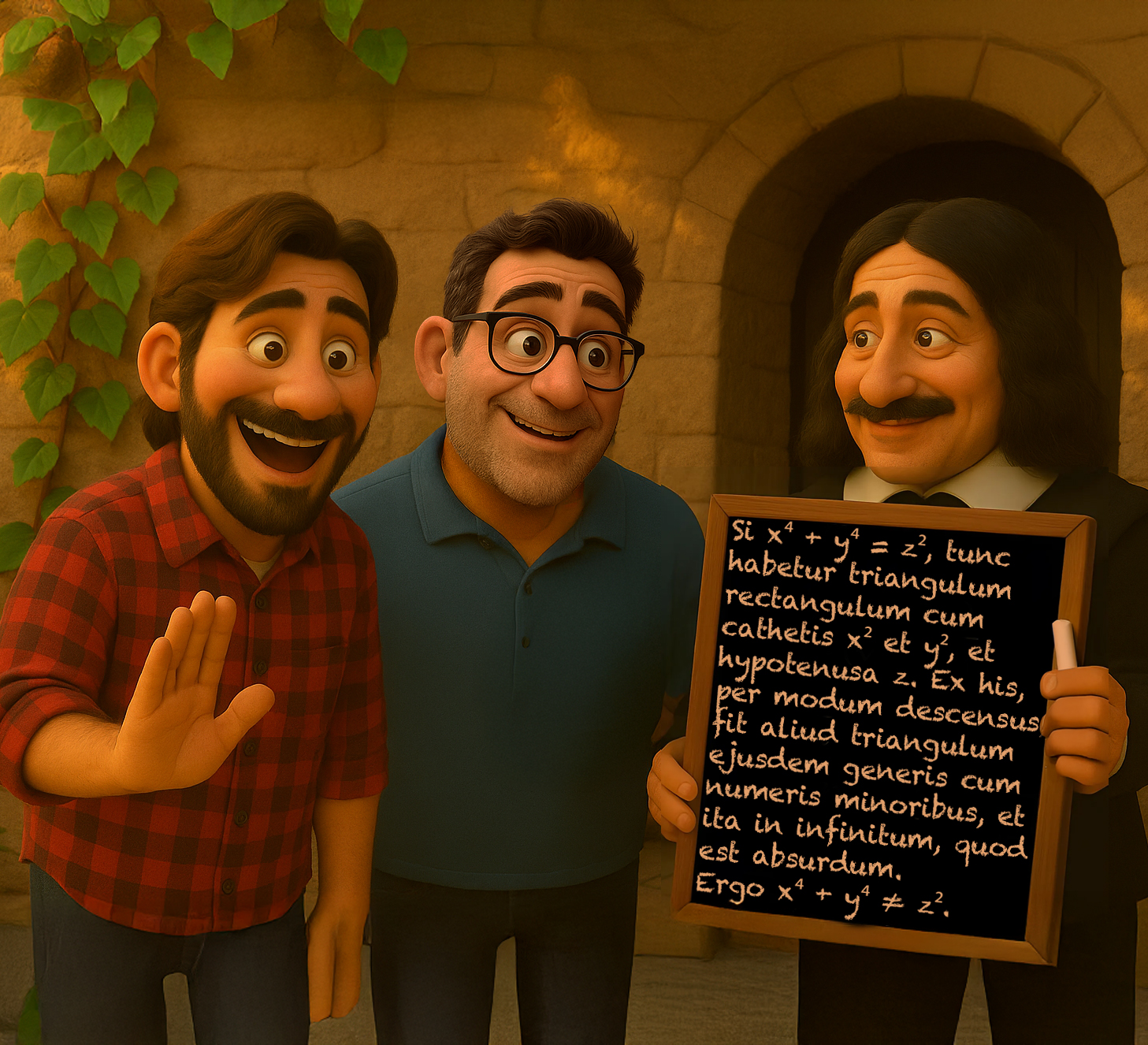
The podcast also spends time on classic mathematical objects and structures—magic squares, conic sections, geodesic domes, higher dimensions, and prime numbers—often pairing definitions with intuition-building examples. Historical narrative appears alongside modern developments, including extended attention to major problems and the long path to proof.
In addition, there are episodes focused on math learning and participation, featuring conversations with educators and organizations about instruction, competitions, tutoring, anxiety around fluency, and learning differences such as dyscalculia. Occasional bonus materials and kid-oriented content support problem-solving with guided challenges and visuals, reflecting an emphasis on making mathematics accessible in multiple formats.